How to Protect Sprinkler Lines in Garden Areas You Till
I was tilling my raspberry garden with a garden fork when I cracked the main 2-inch sprinkler distribution pipe and created a huge geyser. After repairing the line, I came up with a simple way to protect sprinkler pipes that run through garden beds.

The Problem: Sprinkler Pipes in the Worst Possible Place
For some reason, sprinkler contractors often run irrigation pipes directly through garden areas. Unfortunately, those are the exact places where people dig, shovel, till, plant, and amend the soil year after year.
This year alone, I cracked sprinkler lines twice: once in the flower garden in front of my house, and again in my raspberry garden. The second break was on the main 2-inch distribution pipe, which made the repair much more difficult.
After shutting off the main valve and fixing the broken pipe, I decided I needed a better solution. I did not want to keep repairing sprinkler lines every time I worked in the garden.
Repairing the Broken 2-Inch Sprinkler Line
Because 2-inch PVC pipe is very stiff, I used a telescoping slip-fix coupling to repair the break. A slip fix has an internal O-ring and a sliding pipe section that extends to bridge the gap after the damaged section is removed.
One thing I learned is that a telescoping slip fix should be buried or held in place before the system is pressurized. If it is left exposed, water pressure can push the telescoping section outward and bow the pipe. I placed heavy buckets over the pipe temporarily to keep it from moving while testing the repair.
Since I already had the pipe exposed, I also used the opportunity to add a new dedicated sprinkler valve for the raspberry garden.
My Solution: Use 4-Inch PVC Pipe as Sprinkler Line Armor
To prevent this from happening again, I decided to cover the buried sprinkler lines with sections of 4-inch PVC pipe. The idea is simple: cut the 4-inch pipe in half lengthwise, then place the half-pipe sections over the sprinkler lines before backfilling the soil.
These half-round PVC sections act like armor. If I dig, till, or use a garden fork in the future, the tool should hit the protective cover before it reaches the sprinkler pipe underneath.
Why Use Short Sections?
Instead of using one long 10-foot piece, I cut the pipe into shorter 2- to 3-foot sections. That way, if I ever need to access the sprinkler line again, I only have to dig up a small section rather than trenching across the entire garden bed.
Basic Steps
- Expose the sprinkler pipe carefully.
- Repair any damaged pipe or fittings.
- Cut 4-inch PVC pipe in half lengthwise.
- Cut the half-pipe into 2- to 3-foot sections.
- Lay the sections over the sprinkler line like a protective shield.
- Backfill the soil over the protected pipe.
The 4-inch pipe covers the exposed sprinkler lines very well. After backfilling, the irrigation pipe is still buried, but now it has a protective barrier above it.
Adding Wireless Sprinkler Control
Since I added a dedicated valve for the raspberry garden, I also needed a way to control it. I did not have sprinkler wires running to that area, so I used a wireless, battery-powered sprinkler controller from Vegetronix.
The controller is Wi-Fi enabled and designed to use very little power. The valve itself is a latching valve, which only uses power for a few milliseconds when it switches on or off. Because of that, the battery pack can last more than a year.
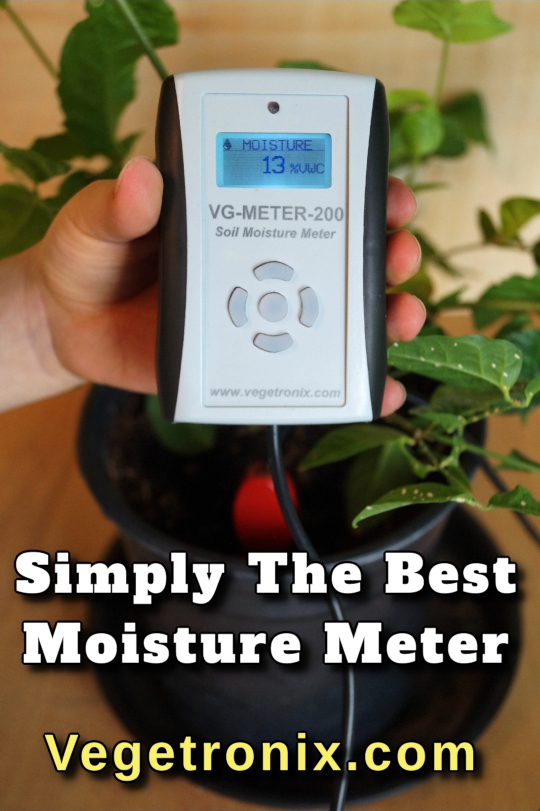
The controller also has an input for a soil moisture sensor. This allows the system to water the raspberry plants until the soil reaches the correct moisture level, then shut the valve off automatically.
That is especially useful for raspberries because it helps prevent both underwatering and overwatering.
Turning a Sprinkler Disaster Into an Upgrade
Breaking a sprinkler line is frustrating, especially when it creates a geyser in the middle of a garden. But this repair gave me a chance to improve the system.
Now the raspberry garden has its own dedicated valve, wireless control, soil moisture-based shutoff, and physical protection over the sprinkler lines.
I am Tim, the Techno-Gardener. I am an electrical engineer who applies engineering principles to gardening. The goal is not just to use standard gardening techniques, but to improve them.
Products Used in This Project
This project used a wireless Vegetronix sprinkler controller, a latching sprinkler valve, and a soil moisture sensor to automate watering in the raspberry garden.
You can learn more about gardening sensors and automation products at: Vegetronix.com
Have You Broken a Sprinkler Line While Digging?
If you have ever cracked a sprinkler line while tilling, digging, or planting, this simple PVC pipe armor idea may help prevent the same problem in the future.
Protecting the line now is much easier than repairing another broken pipe later.