How to Measure VWC (Volumetric Water Content) of Soil Samples
This technical article discusses a simple procedure for graphing the volumetric water content, (VWC) of soil samples.
Volumetric water content is a numerical measure of soil moisture. It is simply the ratio of water volume to soil volume. Another equally valid measurement is GWC, gravimetric water content, which measures weight rather than volume.
Graphing the VWC for a soil sample is a simple process. Anyone who can use a measuring cup or scale, can do it.
Tools you will Need to Measure Soil Moisture
- A VH400 soil moisture sensor probe from Vegetronix.
- A soil moisture sensor probe reader, or a multimeter to measure probe voltage.
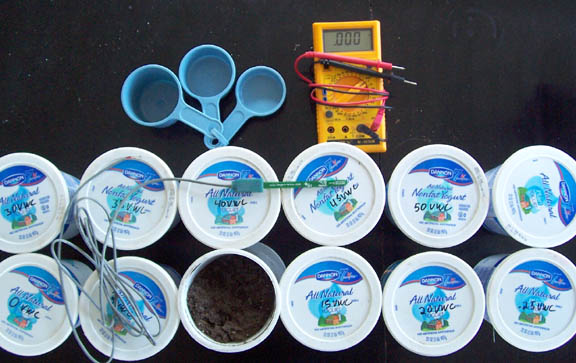
- 10, one quart yogurt containers with lids.
- Measuring cups and scales.
- An oven.
- The soil which is to be tested.
Procedure for Measuring Soil Moisture
- Bake about 10 quarts of soil at 300F for 24 hours in a large pot. Stir the soil periodically. It is important that all moisture that is in the soil be baked out of it to get accurate measurements.
- Fill each of the yogurt containers with enough soil such that the VH400 soil moisture sensor probe will be able to be completely inserted. A good quantity would be about 3 cups. Make sure the soil is homogeneous and compacted as you measure it. One you have measured out a volume of soil for the first container. Weigh it and then make sure the other 9 quarts have the same weight. If the soil is homogeneous, then equal volumes have equal weight.
- Now using measuring cups fill each of the 10 yogurt containers that have dry soil with varying degrees of water. The first container will have no water. The second should have 5%, third 10 %, and so on. For example, for the 5%, if you've used 3 cups of soil then you need to use .15 cups of water. A scale may be employed to measure the water, to make measuring more accurate and easy.
- Label each of the 10 samples so that you don't forget which is which.
- As you continue to add water to the soil a point will be reached where the water and soil can not be homogeneously mixed, the water will immediately separate to the bottom of the soil. The point at which this happens is the "hold capacity" of the soil. In other words the soil can not hold any more water. For example, sandy soil will hold less water than soil with lots of organic material. It doesn't make sense to do VWC measurements beyond the holding capacity of the soil. Typical holding capacities are around 50% VWC.
- Mix the soil samples, and set them in the sun for a few ours to heat them up so that the water distributes evenly in each sample.
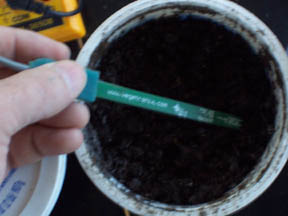
- Insert the VH400 soil moisture sensor probe into each sample. Make sure the soil is compact, and that the soil moisture sensor probe is fully inserted and making good contact with the soil. Make sure you do not touch the probe blade, as this will throw off the reading because of the water content of your hands.
- Use a probe reader, or multimeter to record the voltage reading for each of the samples. With this information, you can graph the VWC for each sample as a function of probe voltage.